
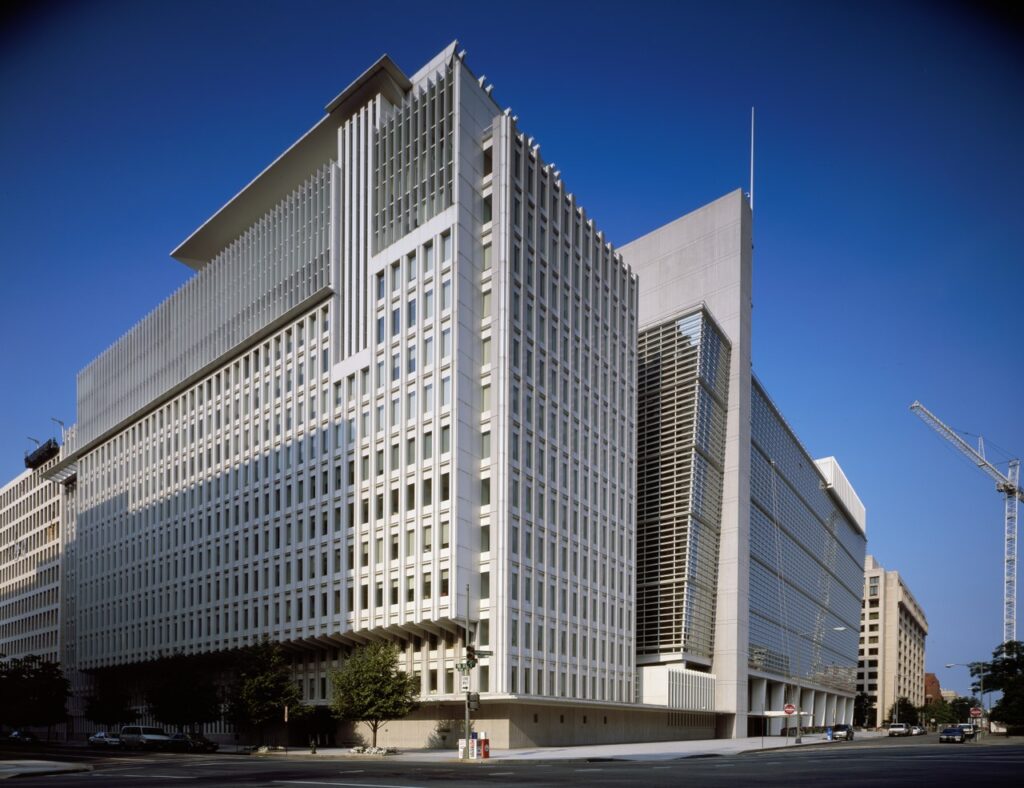
Headquartered in Washington DC, the International Monetary Fund (IMF) has been in operation for nearly 80 years.
In the below article, we’ll look at its history and its role in today’s global economy.

A new economic order...
The IMF started life in the 1940s when the allies began to meet to discuss how to create a new economic order following the inevitable defeat of Nazi Germany and its allies. They wanted to create an international financial system that would help to avoid the economic crises that had led so many countries to descend into turmoil and political instability.
Initially, 40 countries joined up as member states. For a period during the height of the Cold War, many Communist bloc countries left. Today the IMF has 190 member countries, the only notable non-members being Cuba and North Korea.
6 founding principles...
The IMF was founded with 6 core purposes, which are as follows (in their own words):
(i) To promote international monetary cooperation through a permanent institution which provides the machinery for consultation and collaboration on international monetary problems.
(ii) To facilitate the expansion and balanced growth of international trade, and to contribute thereby to the promotion and maintenance of high levels of employment and real income and to the development of the productive resources of all members as primary objectives of economic policy.
(iii) To promote exchange stability, to maintain orderly exchange arrangements among members, and to avoid competitive exchange depreciation.
(iv) To assist in the establishment of a multilateral system of payments in respect of current transactions between members and in the elimination of foreign exchange restrictions which hamper the growth of world trade.
(v) To give confidence to members by making the general resources of the Fund temporarily available to them under adequate safeguards, thus providing them with the opportunity to correct maladjustments in their balance of payments without resorting to measures destructive of national or international prosperity.
(vi) In accordance with the above, to shorten the duration and lessen the degree of disequilibrium in the international balances of payments of members.

The IMF today...
Today the IMF has a handful of key day-to-day functions. To begin they are the monitors of the economic and financial policies of their members. The IMF is widely seen as one of the ultimate judges of fiscal responsibility. A negative IMF report can severely damage the standings of domestic politicians and their plans.
You only need to look at the drama of the UK’s 7-week government of Liz Truss to see this in action. IMF criticism of her policies was widely seen as a big contributing factor to her loss of credibility and ultimate loss of office.
The IMF also acts as the lender of last resort to major global economies and the lender of developmental loans to low-income economies. The IMF has over $ 1 trillion available and often lends at 0% interest rates to developing economies.
Finally, over 160 countries are able to tap into a pool of training and assistance from IMF experts when it comes to fiscal and monetary policy. IMF advisors can often be found in Treasuries around the world, working with local civil servants to reform and formulate new fiscal policies.
The below glossy video by IMF gives a nice overview of the IMF’s history, its current role in the world and its future vision.