

With private aeroplanes currently lining the jetways of St.Moritz Airport and a large chunk of the world’s economic, political and business elite donning snow shoes, we thought it would be a good opportunity to take a deep dive into what exactly ‘Davos’ or more precisely ‘The World Economic Forum’ actually is.
Some background…
The World Economic Forum (WEF) was founded in the 1970s by Klaus Schwab, a professor at the University of Geneva. It was initially known as the European Management Forum, changing its name to the World Economic Forum a decade or so later.
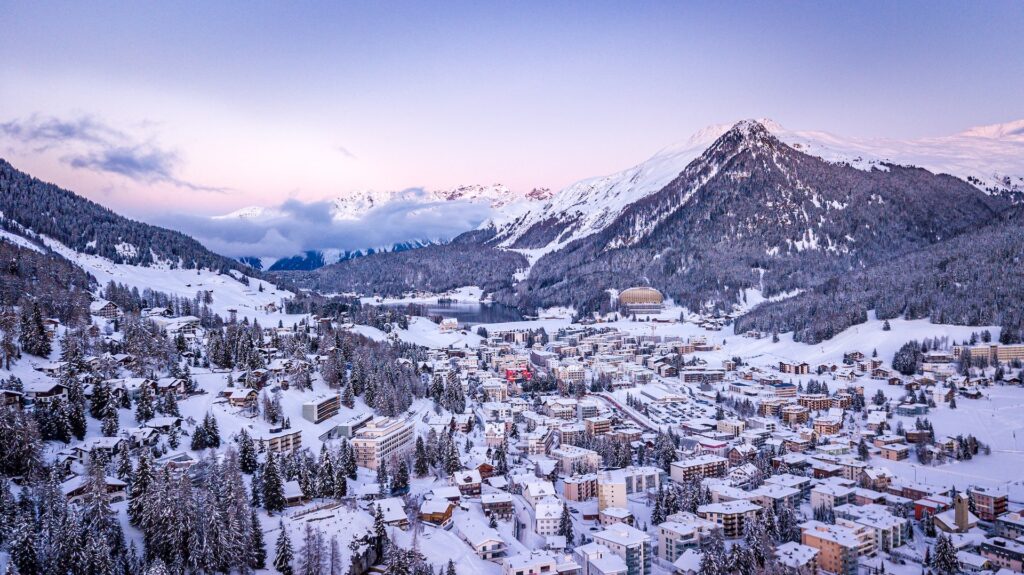
Right from day one it has taken place in Davos, an Alpine mountain resort with breathtaking views in the eastern Swiss Canton of Graubünden. The first event used the Davos Congress Centre for its meeting in February 1971 and set the location’s precedent for the next 50+ years.
The initial aim of the Forum was to bring together Western European businesses to look at how they could in effect ‘catch up’ with their more modern-looking counterparts in the United States. Around 400 business leaders were invited to share best practices, learn from one another and make some informal agreements on how to improve as a whole.
Over time the mission of the WEF has expanded considerably. It firstly brought in more and more businesses, then became more organised with a more clear, more formal structure. Its scope steadily moved from out of just Europe and business and into an international geo-political context.
What is the purpose of the WEF today?
The WEF has the tagline ‘committed to improving the state of the world’ which very succinctly sets out its stall.
The main point is to create a space where influential people can come together and discuss the challenges that the world faces.
It seeks to foster collaboration through easy dialogue rather than formal governmental meetings.
The below video by the WEF sets out the purpose most clearly and dispels some key myths:

What's on the agenda this year in 2023?
A lot has changed since the last meeting in 2022. We’ve come out the other side of the pandemic but the world economy has taken a nose dive, countries have become more politically divided than ever, climate change has continued to grow in importance and there’s a war in Europe.
Given the above, it’s appropriate that this year’s forum has the theme: Cooperation in a Fragmented World. There are 5 key topics that this year’s forum is seeking to address.
- Addressing the Current Energy and Food Crises in the context of a New System for Energy, Climate and Nature
- Addressing the Current High Inflation, Low Growth, High Debt Economy in the context of a New System for Investment, Trade and Infrastructure
- Addressing the Current Industry Headwinds in the context of a New System for Harnessing Frontier Technologies for Private Sector Innovation and Resilience
- Addressing the Current Social Vulnerabilities in the context of a New System for Work, Skills and Care
- Addressing the Current Geopolitical Risks in the context of a New System for Dialogue and Cooperation in a Multipolar World
You can find out more about this years WEF and watch the sessions by visiting the 2023 WEF website.