
Who actually sets interest rates around the world?

Given the ongoing economic crises in various countries around the world, attention at the moment is rightly more focused on interest rate decisions than in normal times. 

The process for raising or lowering interest rates varies from country to country. For some, it’s a pretty simple decision made by the Finance Minister, for others, it is a long convoluted process that takes days or even weeks to achieve.

Below we’ll take a look at some of the world’s key economies and how their interest rate decisions are made.

United Kingdom

To begin with we’ll start at home with the UK.

Interest rates are set by the Bank of England which has been fully independent of government control since the late 1990s. 

The decision is taken by the Monetary Policy Committee which consists of nine members. 

These members include the Governor, his three deputies, the Chief Economist and four external members. 

The monetary policy committee meets 8 times a year and its decisions are based on a vote of the members after a set of lengthy formal meetings. 

The results of the vote are published in full and those who voted against the majority have to state what rate they would have preferred. If there is a tie, the Governor has the casting vote.

(Interest Rates are set in by the Bank of England's Monetary Policy Committee in the UK)
(Interest rates in the US are set by the Federal Reserve )

United States

Now turning to the USA, the decision across the Atlantic is taken by the FOMC (the Federal Open Market Committee of the Federal Reserve System)- a long title!

The FOMC meets every 6-8 weeks and is made up of the Board of Governors of the Fed, the President of the Federal Reserve Bank of New York and four rotating regional president members from across the country.

Other key figures from the Federal Reserve system attend and partake in the discussions but do not vote. 

They meet in Washington DC and publish minutes of their discussions three weeks after the event. Like in the UK, how members voted is published.

The Eurozone

The decision making process for interest rates in the eurozone is the responsibility of the European Central Bank’s Governing Council. 

This council consists of the ECB’s Executive Board and 15 national central bank governors who take their seats on a rotating process (like in the US).

They meet every 6 weeks to make a decision on the interest rate. 

Unlike the UK and the US though, they do not publish the minutes or voting records from their meetings. This is in large part to help the individual governors who could be pressured by their respective countries one way or another and to facilitate a Europe-wide decision making process.

(The European Central Bank is HQ'd in Frankfurt)
(The PBoC is responsible for setting rates in China)

Image Copyright: Max12Max, CC BY-SA 4.0, via Wikimedia Commons
China

The system in China is much more complicated than in the West and is shrouded in much more levels of secrecy and bureaucracy. 

The Peoples’s Bank of China is the responsible authority however it is not independent of the government and is instead more of an arm of the government.

The PBoC is known for surprising many with its decisions and often focuses on other monetary policy tools other than interest rate changes when making interventions in the economy.

Japan

Interest rates in Japan are the responsibility of the Bank of Japan, often known as the Nichigin which is based in Tokyo.

The decision is taken by the Policy Board which consists of nine members including the Governor and his two deputies.

The Bank of Japan is independent of the Japanese Government and it is clear and transparent in many of its actions. It publishes detailed information on its decision-making process in both Japanese and English.

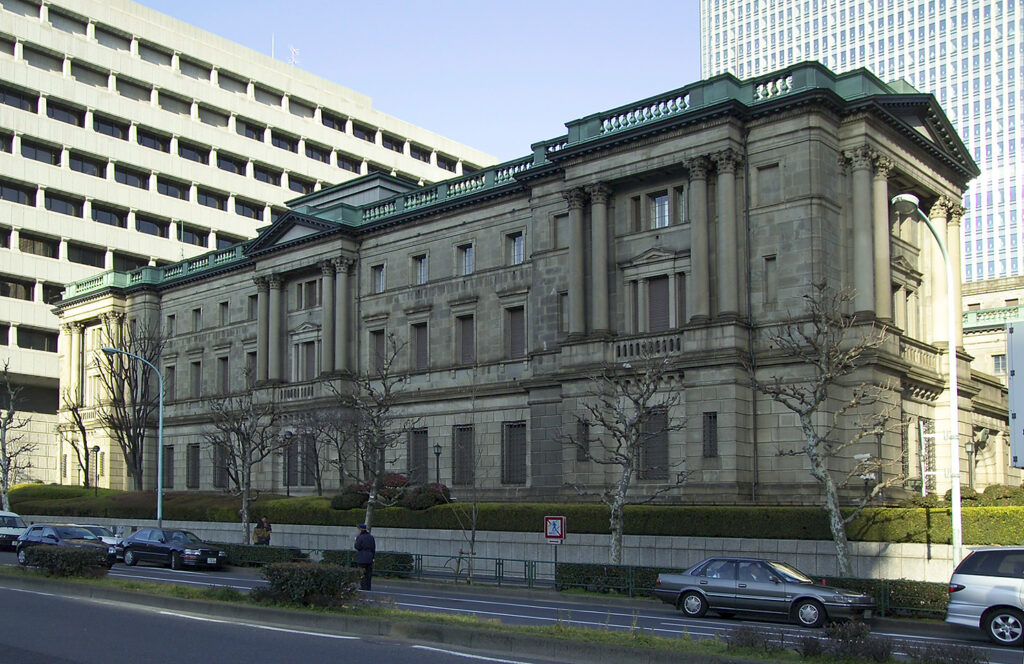
(The Bank of Japan in Tokyo)

Latest Blog Posts:

2025 Currency Outlook

2025 Currency Outlook

This overview provides a detailed analysis of currency trends for 2025, focusing on the Pound Sterling (GBP), US Dollar (USD), and Euro (EUR). It highlights expected performance amid shifting economic conditions, key policy changes, and market dynamics. From projected exchange rate fluctuations to the broader implications for businesses and individuals,…

Upon the Threshold: US-China Relations amid the Election Season

Upon the Threshold: US-China Relations amid the Election Season

The US-China Trade Relationship at a Turning Point As the United States processes the result of one of the most important elections in recent history, the question of the state of trade with China stands at a particularly decisive and divisive juncture, one that could reshape and restructure the landscape…

Dollar Volatility and US Election

Dollar Volatility and US Election

Understanding Dollar Volatility amid the US Election Season Historically, the U.S. dollar has faced considerable fluctuations during election seasons, often impacting businesses and individuals involved in international transactions. Factors influencing the dollar’s value are numerous, including the policies of competing candidates, the evolution of economic data, and the varied responses…

1 2 3 4 25

Discover more from Finseta

Subscribe now to keep reading and get access to the full archive.

Continue reading

Sonny Hellmers

Senior currency specialist